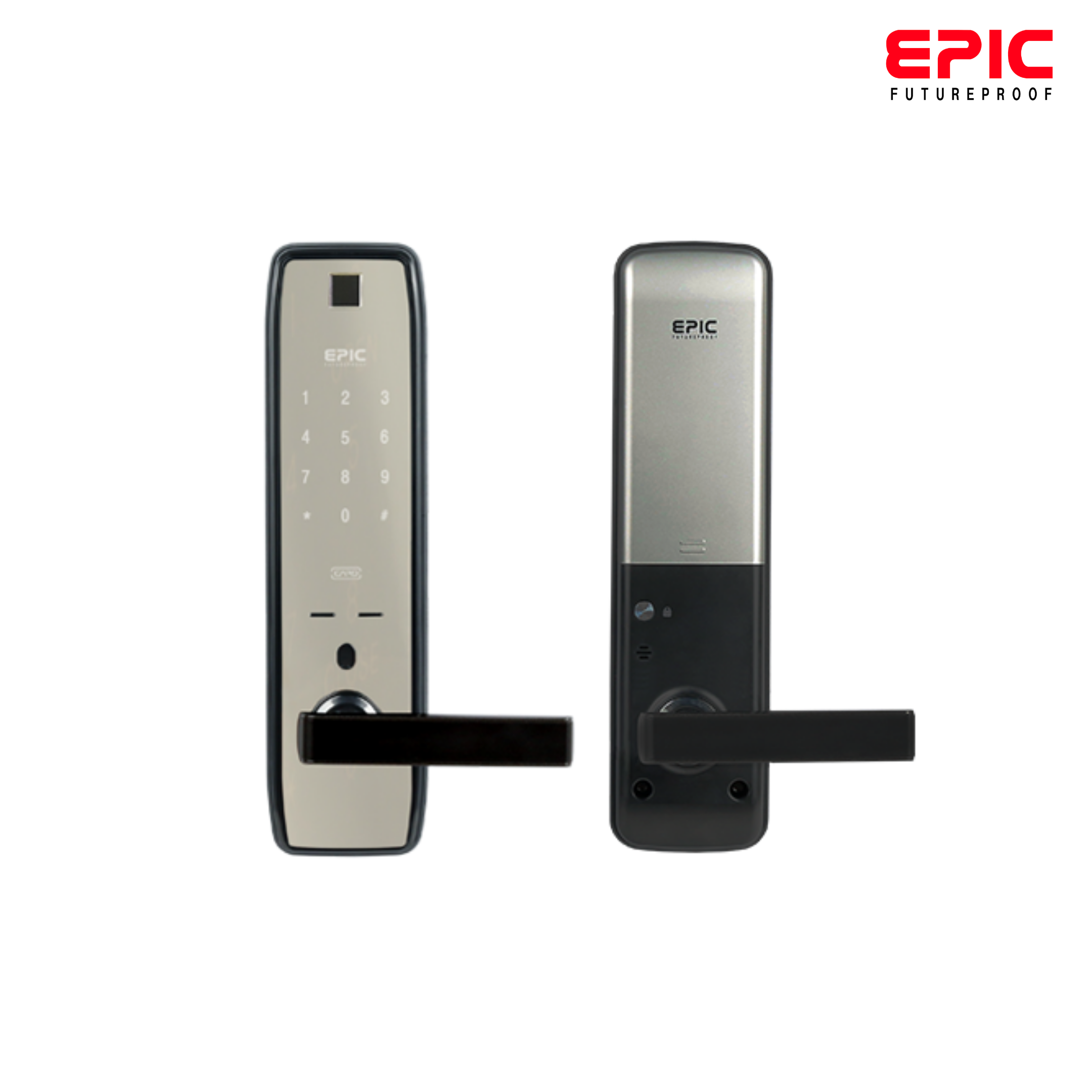
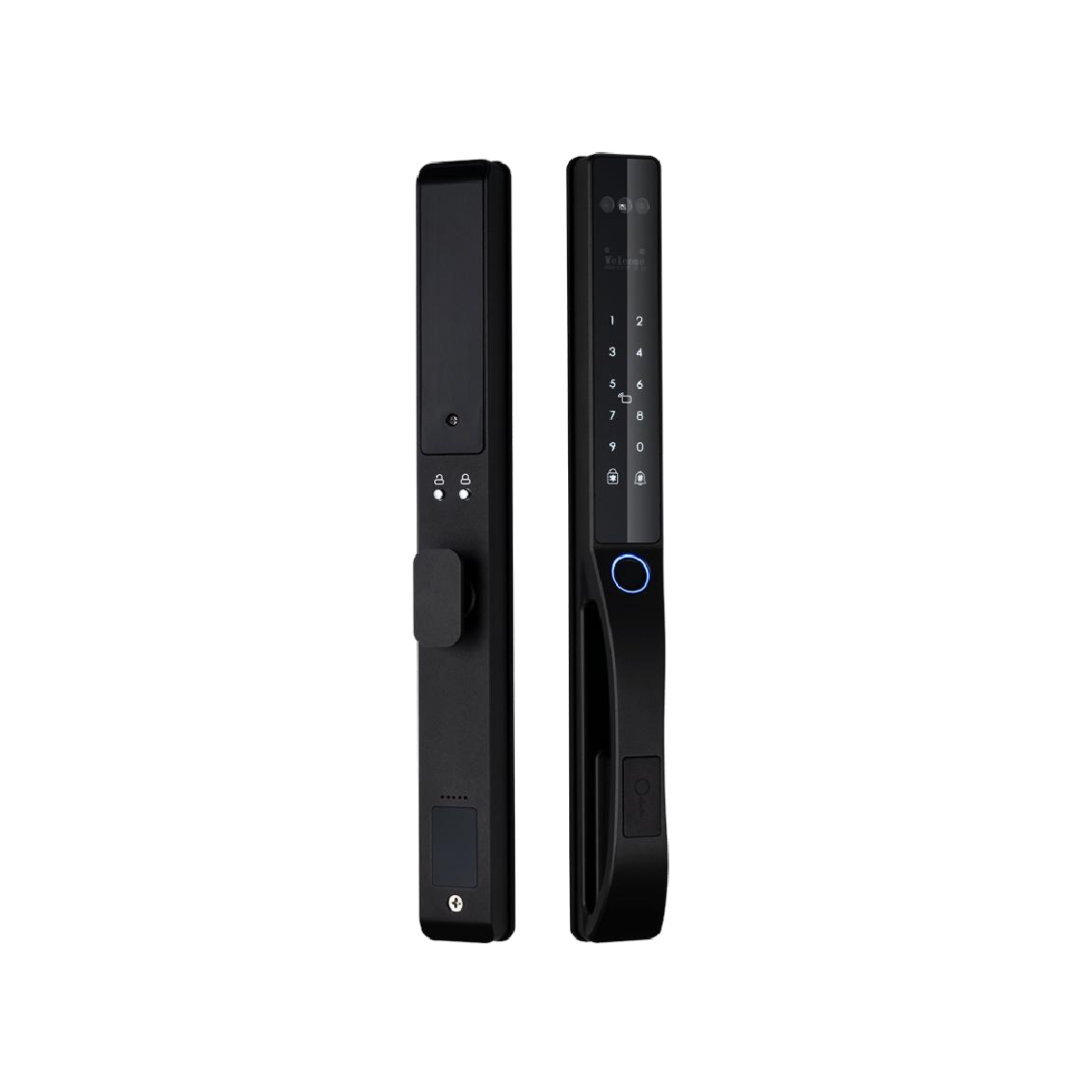
Digital Door Locks prioritize standalone convenience for residences and boutique spaces, whereas Access Control serves as an enterprise-wide ecosystem managing identity, time schedules, multi-zone security, and seamless payroll/HR integrations.
The Common Misconception: Looking Similar, Yet Built for Different Worlds
When discussing electronic door entry using keycards, fingerprints, PIN codes, or smartphones, many people casually categorize every setup as a "Digital Door Lock."
In reality, they are fundamentally distinct.
Digital Door Locks and Access Control systems may look similar because both govern who can enter a door, and modern technology continues to blur the physical line between them.
Many modern Digital Door Locks can now manage users, view access history, connect to mobile applications, and even support remote cloud administration.
However, the defining distinction lies in the underlying system architecture and the operational scale each was engineered to support.
In the simplest terms:
- Digital Door Lock: A locking solution focused on a specific, standalone door or compact private space.
- Access Control: An enterprise-wide security framework engineered to govern "Who can enter Which location, At What time, and Under What conditions."
They are built for two entirely different engineering worlds.
What is a Digital Door Lock?
A Digital Door Lock is an electromechanical lockset that consolidates electronic verification, power, and motorized locking directly inside the lock chassis.
Instead of relying solely on mechanical keys, users can unlock doors via:
- PIN codes
- RFID Smart Cards
- Biometric Fingerprint Recognition
- Smartphones via Bluetooth or Wi-Fi
- 3D Face Recognition
- Remote unlocking through online cloud gateways
Its signature advantage is easy installation with complete, standalone closure per door.
If your home has a single entrance door, you install a digital lock, register your PIN and fingerprints, and you're immediately operational:
No central controller required.
No dedicated server.
No complex wiring conduits traversing the building.
The lock operates autonomously using its own internal battery pack.
This makes Digital Door Locks ideal for:
- Private residences
- Condominiums
- Private offices and executive suites
- Small boutique studios
- Spaces with only a handful of portals
Plug-and-play simplicity with virtually zero IT infrastructure maintenance.
Digital Door Locks offer refined aesthetics and fast 1-2 hour installation without touching the building's electrical conduits or IT network.
Modern Digital Door Locks: Advanced User Management & History
It is vital to clarify an outdated misconception: many older articles still portray Digital Door Locks as rudimentary keypads where you enter numbers and that's it.
Modern reality has progressed far beyond that.
Contemporary Digital Door Locks—especially those featuring smartphone app and cloud connectivity—deliver powerful capabilities:
- Rapid user onboarding and biometric deletion
- Temporary One-Time Passwords (OTPs) for cleaners or visiting technicians
- Time-bounded schedules (e.g., allow entry only between 09:00 and 17:00)
- Real-time visibility into who unlocked the door
- Historical event audit trails viewed in-app
- Push notifications sent instantly to mobile devices
- Multi-lock administration via cloud dashboards
For private homes, Airbnb hosts, rental properties, and small boutique offices, modern Digital Door Locks satisfy user management needs splendidly.
However, the foundational architectural limitation remains:
It is engineered with the "individual door" or "compact space" as its center of gravity.
It is not architected to govern hundreds or thousands of personnel, scores of doors, and intricate security policies across an entire enterprise campus.
This is precisely where Access Control diverges.
What About Access Control?
Access Control thinks on a vastly larger enterprise scale.
It doesn't merely ask:
"How does this specific door unlatch?"
Instead, it orchestrates:
"What authorization does this identity hold, which physical zones can they enter, and during which exact time windows?"
Consider a company with 500 employees and 50 portals across a campus:
- Accounting staff can enter the main office and accounting suite.
- IT engineers can access the Server Room 24/7.
- General employees enter the facility between 08:00 and 18:00 on weekdays.
- Facilities and cleaning staff access specific zones during scheduled morning/evening shifts.
- Contractors access only designated construction zones with credentials that expire automatically after project completion.
- Executive leadership retains master clearance across all doors.
This is what Access Control was engineered to deliver.
The physical door is merely an endpoint of an enterprise policy network.
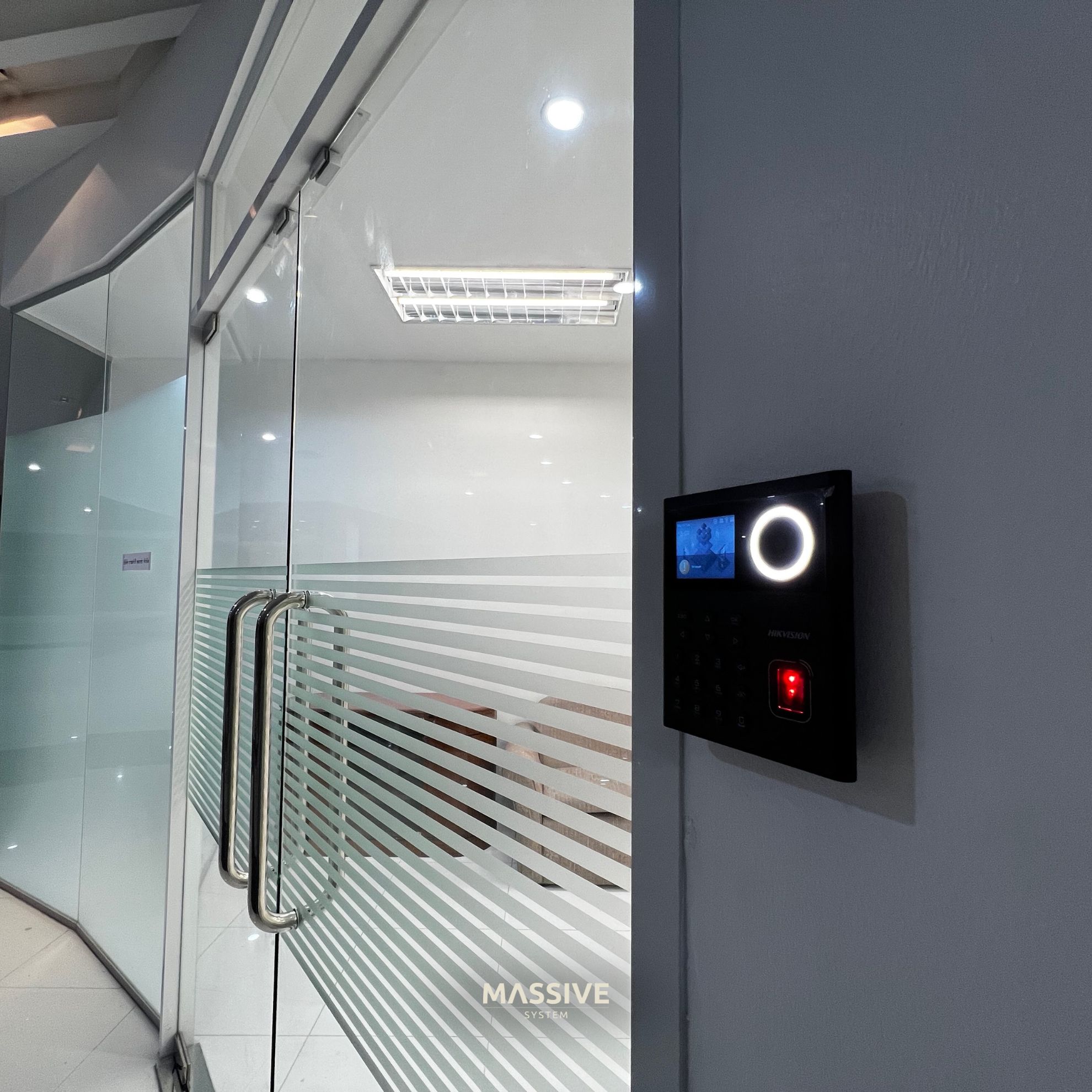
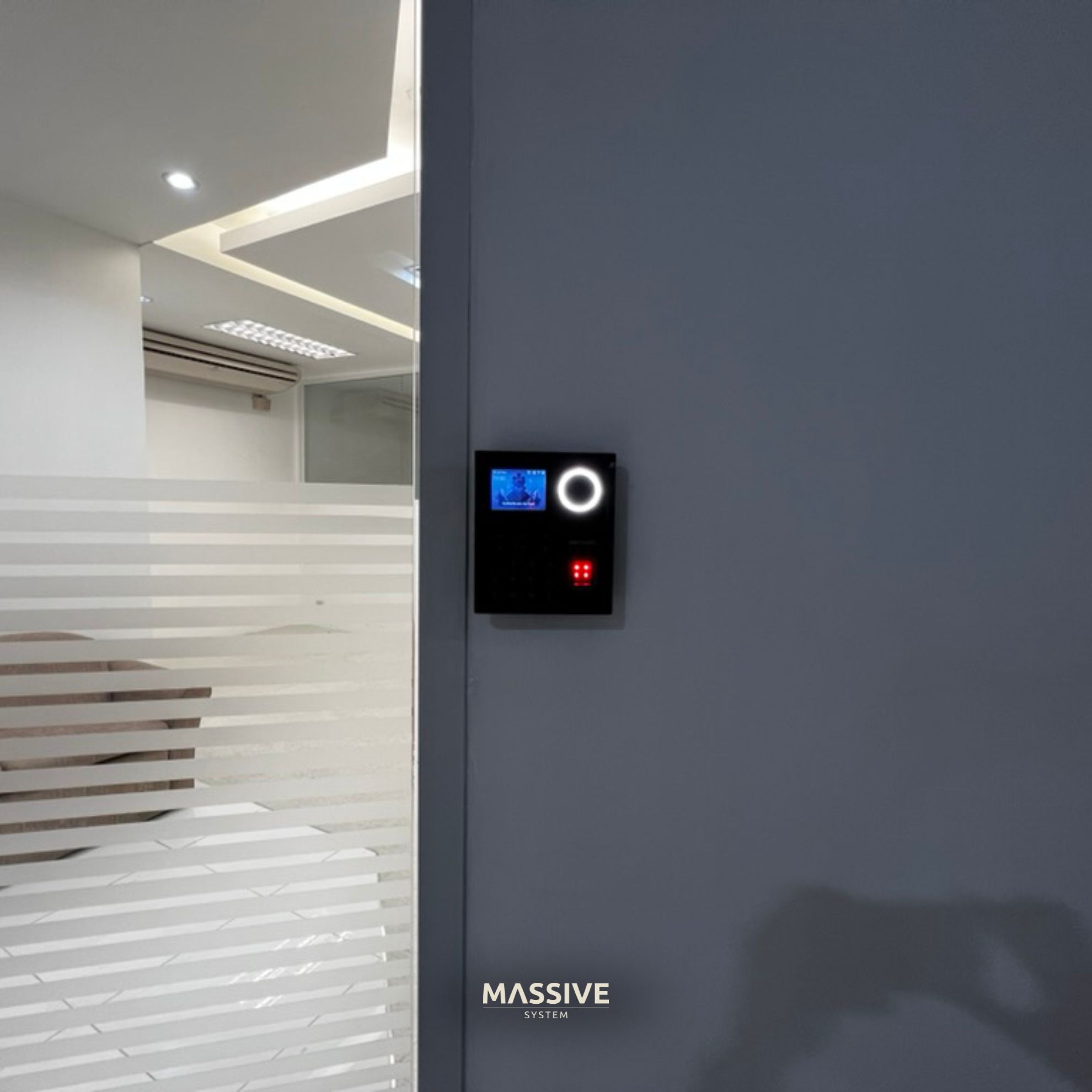
Behind the scenes sits an industrial ecosystem: Readers, Multi-Door Controllers, Electric Dropbolts, Magnetic Locks, Request-to-Exit (REX) Buttons, Door Position Sensors, Central Servers, and Management Software.
When onboarding a new employee, administrators never walk door-to-door.
Enroll the user once centrally, assign their security policy, and their access privileges instantly synchronize across all 50 doors.
This is a fundamental architectural divergence.
Not Just Door Count: Personnel Volume and Usage Frequency Matter
Many assume that if a premise has only one single door, a Digital Door Lock is the automatic choice.
That is not always true.
Imagine that single door is the primary ingress barrier of a busy factory, corporate headquarters, school, 24-hour fitness center, or co-working space experiencing hundreds of entries each day.
Even with only one single portal, if there is a massive volume of users, relentless high-frequency cycling, frequent user additions and revocations, demanding audit requirements, or integration needs with external systems—
Access Control is often far more appropriate than a Digital Door Lock.
In such applications, system planning cannot ask only:
- "How many doors are there?"
You must also evaluate:
- "How many individuals use this door?"
- "How many times is it unlocked per day?"
- "How often are user permissions added or modified?"
- "What level of audit data granularity is required?"
- "Does that access data feed into secondary business workflows?"
A simple real-world comparison:
One residential front door used by 4 family members, opening a few dozen times a day.
versus
One main entrance door at an office tower traversed by 800 employees from early morning to dusk.
Both are technically "a single door," but their architectural requirements are worlds apart.
Never rely solely on door count as the deciding factor. A 10-door boutique facility with minimal traffic may thrive on Digital Door Locks, while a single-door entrance with hundreds or thousands of daily users demands the industrial endurance of Access Control.
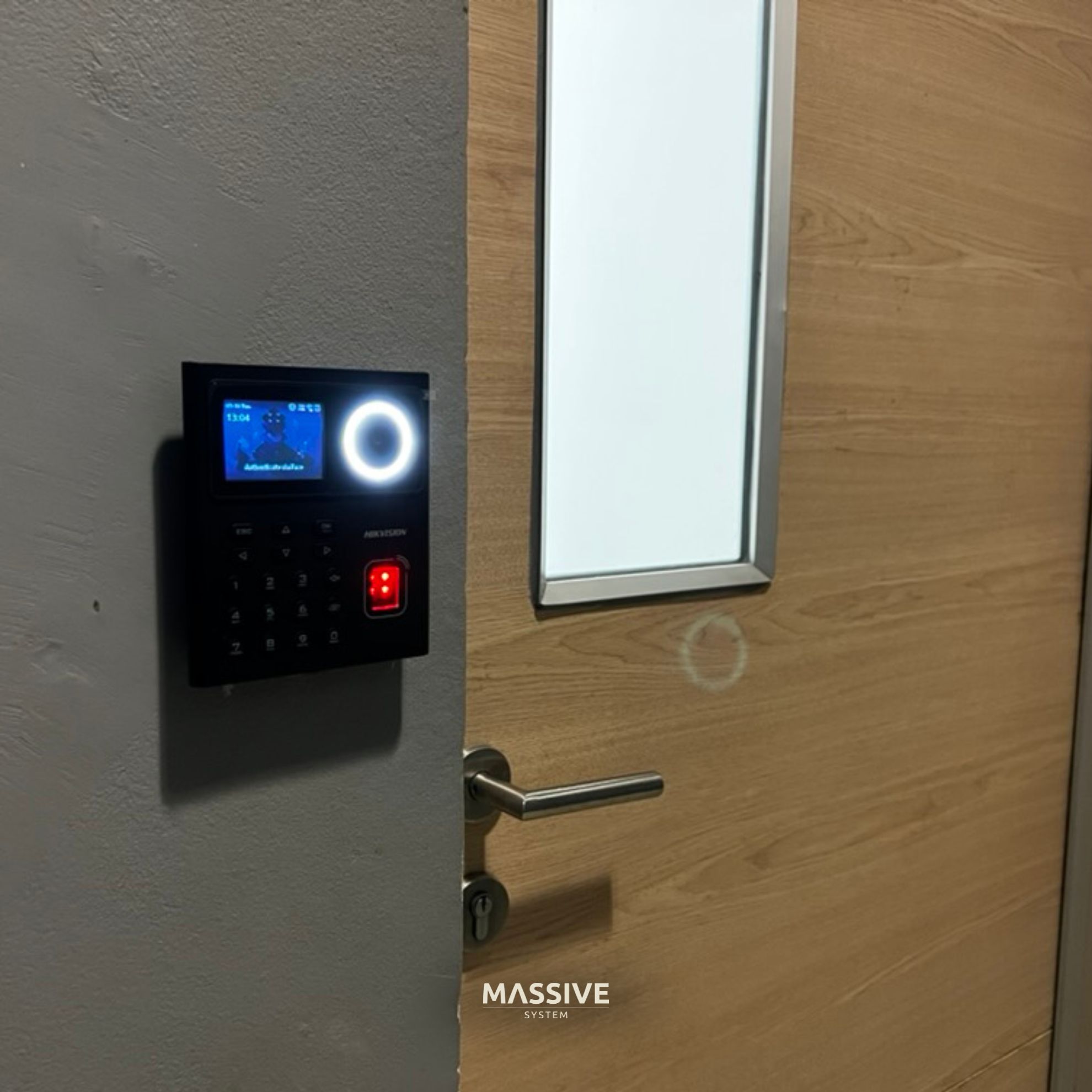
At 1–2 Doors, Differences Fade — If User Numbers Are Small
If an office has only one portal, both solutions may look and behave nearly identically:
- An employee presents their card.
- The latch releases.
- The administrator reviews the smartphone app to see who arrived.
With 10–20 team members and low traffic cycles, a Digital Door Lock is often the superior choice: faster deployment, cleaner aesthetics, and zero cabling headaches.
However, scale that same door from 20 users to 500 users.
Even on the exact same door, the operational reality transforms.
Expand further from 1 door to 50 doors across different departments, operating hours, and clearance levels, and the contrast becomes undeniable:
- When 10 employees resign, you must guarantee their credentials are wiped immediately and reliably from every access point.
- When employees transfer departments, their zone clearances must be updated instantly.
- Contractors on-site for 3 days require auto-expiring temporary permissions.
- Specific secure wings must restrict entry to working weekdays only.
- Executive zones demand strict elevated clearance.
At this tier, you no longer need a "lock that manages users." You require an Enterprise Identity & Access Management (IAM) infrastructure.
That is the true domain of Access Control.
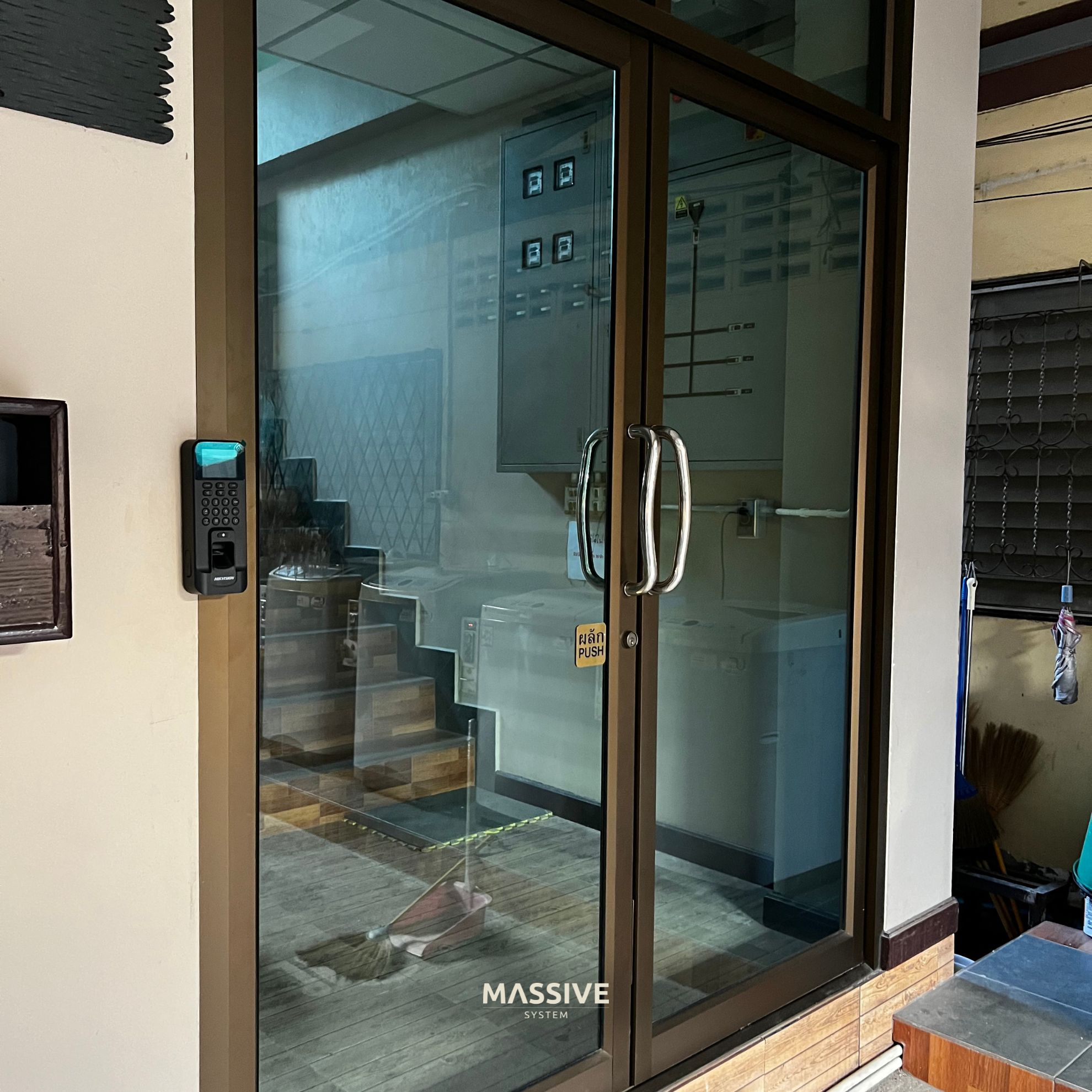
Data Granularity: The Hidden Distinction
Modern Digital Door Locks log entry history, and contemporary models handle this commendably.
If your core requirement is:
“I want to see who unlocked the door and when.”
A commercial digital lock handles this effortlessly.
In an enterprise organization, however, security and audit requirements go much deeper:
- Who attempted access?
- Through which specific portal?
- At what precise millisecond?
- Utilizing what authentication modality?
- Was access Approved or Denied?
- If Denied, what was the exact protocol violation (Expired clearance, wrong time zone, anti-passback violation)?
- Was the door held open beyond threshold (Door Ajar)?
- Was the door forced open without credential authorization (Forced Open Alarm)?
- Has this credential been marked revoked or stolen?
Most importantly: this telemetry is not collected just to "look at." It is engineered to feed automated business operations.
The clearest example is Time Attendance and Payroll Integration:
- The organization feeds employee entry timestamps directly into HR software to automate timekeeping, overtime, and deductions.
- Central software aggregates timestamps from 15 portals for 800 employees in one unified stream.
- Real-time query capability via APIs for Building Management Systems (BMS), CCTV cameras, and elevator controllers.
While select digital locks can export CSV snapshots, Enterprise Access Control was purpose-built from day one around continuous real-time data pipelines.
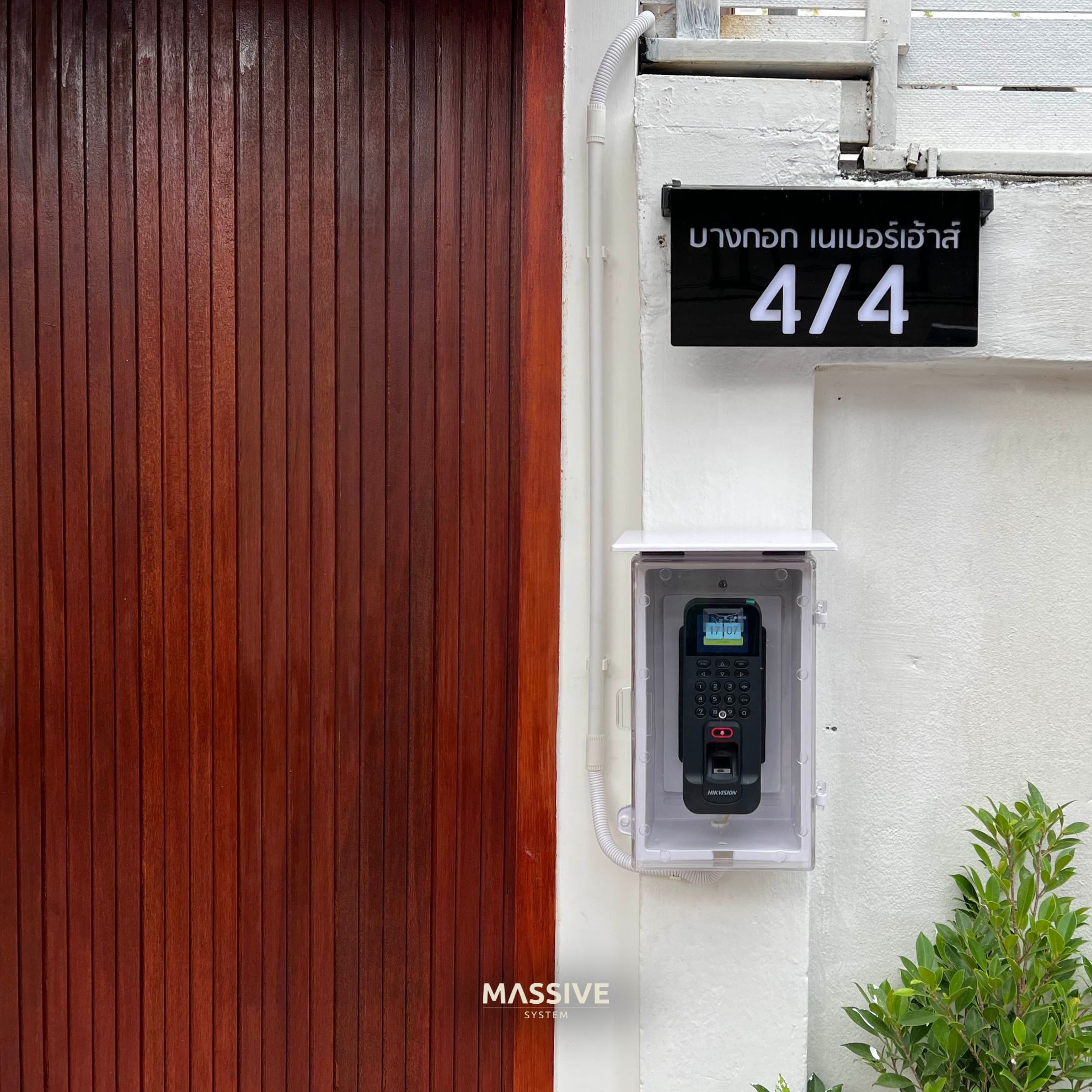
Having a Log vs. Putting that Log to Work: Not the Same Thing
This distinction is overlooked by many purchasers.
A smart lock might display in its app:
"User A unlocked the door at 08:31 AM."
Technically, that counts as having a log.
However, when Human Resources asks:
"Can we push verified attendance telemetry for 800 employees across 12 gates into Payroll automatically every single day?"
That is an entirely different operational league.
Executing automated data synchronization requires structured database schemas, unambiguous User IDs, multi-device queue handling, open APIs, and enterprise server software.
Therefore, when reviewing hardware specifications, don't just stop at:
- "Has History"
- or "Supports 1,000 Users"
and assume it equals an Enterprise Access Control framework.
Always inspect how you will govern the data and what operational workflows rely upon it.
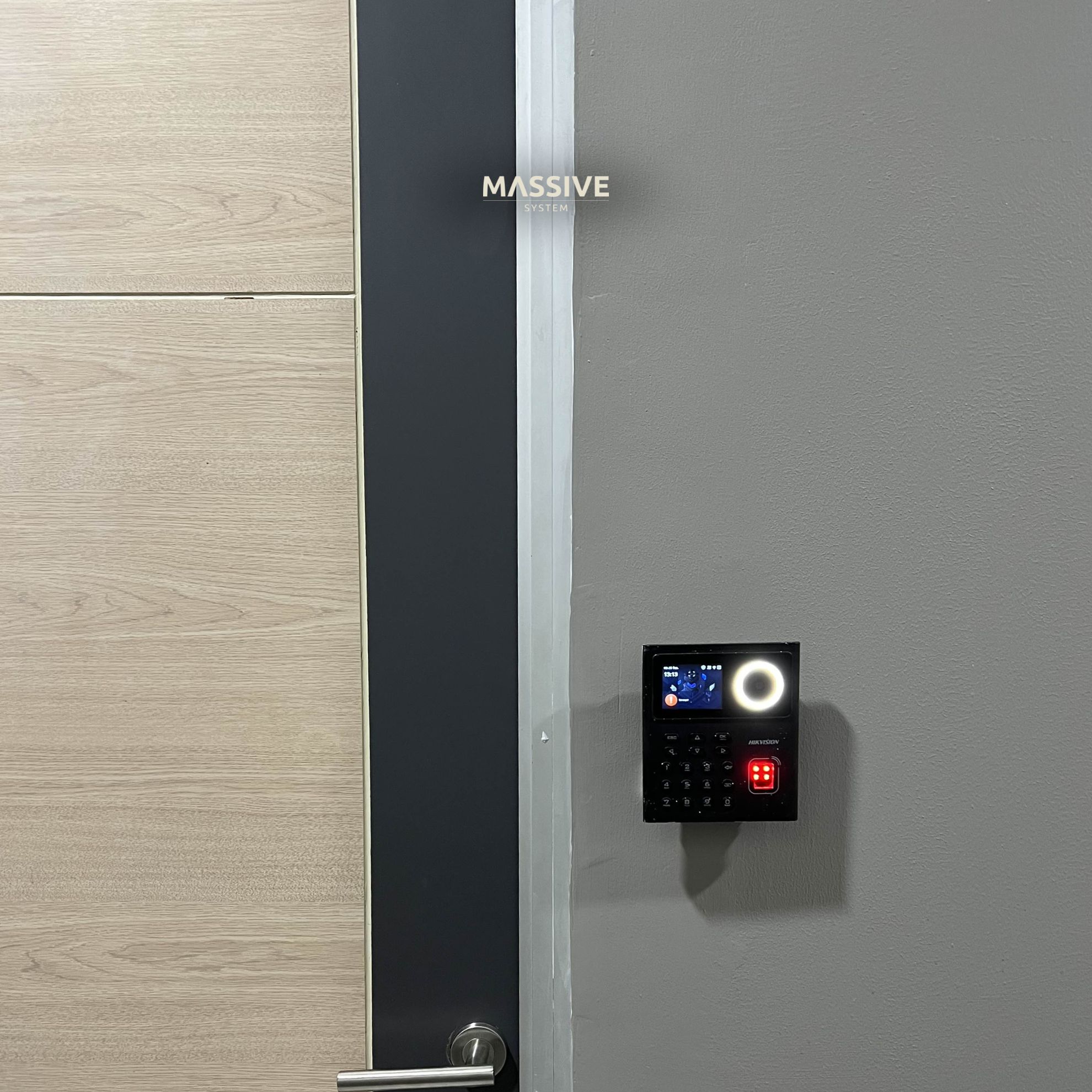
Is a Digital Door Lock Inferior?
Not in the slightest.
They were simply built to solve different problems.
For a private home with a single front door, installing a full industrial Access Control setup with steel power supply boxes, magnetic brackets, and exterior cable raceways would be total overkill.
A high-grade Digital Door Lock:
- Walk up to the entrance.
- Touch your finger to the scanner.
- The motorized deadbolt retracts silently.
Need to add a guest? Open the mobile app.
Want to check arrival time? Review the app history.
It is cleaner, more visually elegant, and vastly more suitable for residential architecture.
The same applies to boutique workspaces:
If you have 10 employees and 2 doors, you don't necessarily need an enterprise server. A commercial digital lock is frequently the more economical, elegant, and frictionless solution.
Never evaluate which system is "better."
Evaluate which technology fits the assignment.
What Should an Office Choose?
When advising office clients, we always assess 5 fundamental parameters:
Number of doors, User population, Ingress/egress frequency, Complexity of permissions, and Downstream data integration.
For a boutique studio with 5–20 staff members and 1–2 entrance doors, a Digital Door Lock is typically far easier and more economical.
However, once you manage substantial personnel volume—even on a single door—or expand across multiple floors and departments with rigorous criteria:
- Role-based access (who can enter vs. who is restricted)
- Time-bracketed schedules (e.g., active shifts only)
- Visitor registration and expiring badge management
- Immediate, fail-safe revocation when employees depart
- Forensic audit log retention
- Closed-Circuit Television (CCTV) event linking
- Destination-controlled elevator landing integration
- Speed gates / Turnstile barrier synchronization
- Automated clock-in for Time Attendance tracking
- Direct feed into HR and Payroll engines
- Custom REST API enterprise integrations
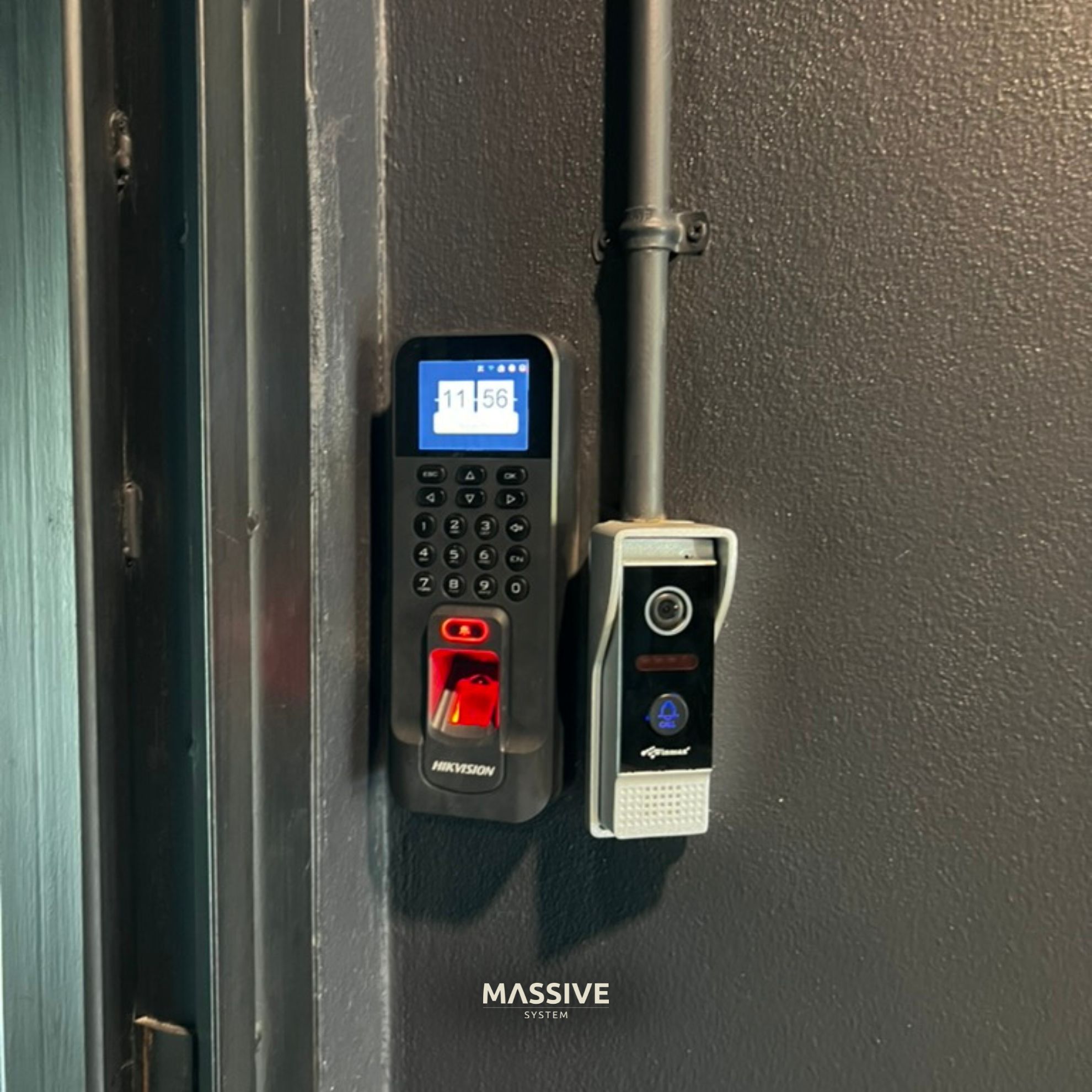
At that point, your design must transition to an Access Control System.
In Reality, Both Systems Can Harmoniously Coexist
Here is an architectural truth that many clients do not realize:
You never have to choose Digital Door Locks vs. Access Control on a mutually exclusive 100% basis.
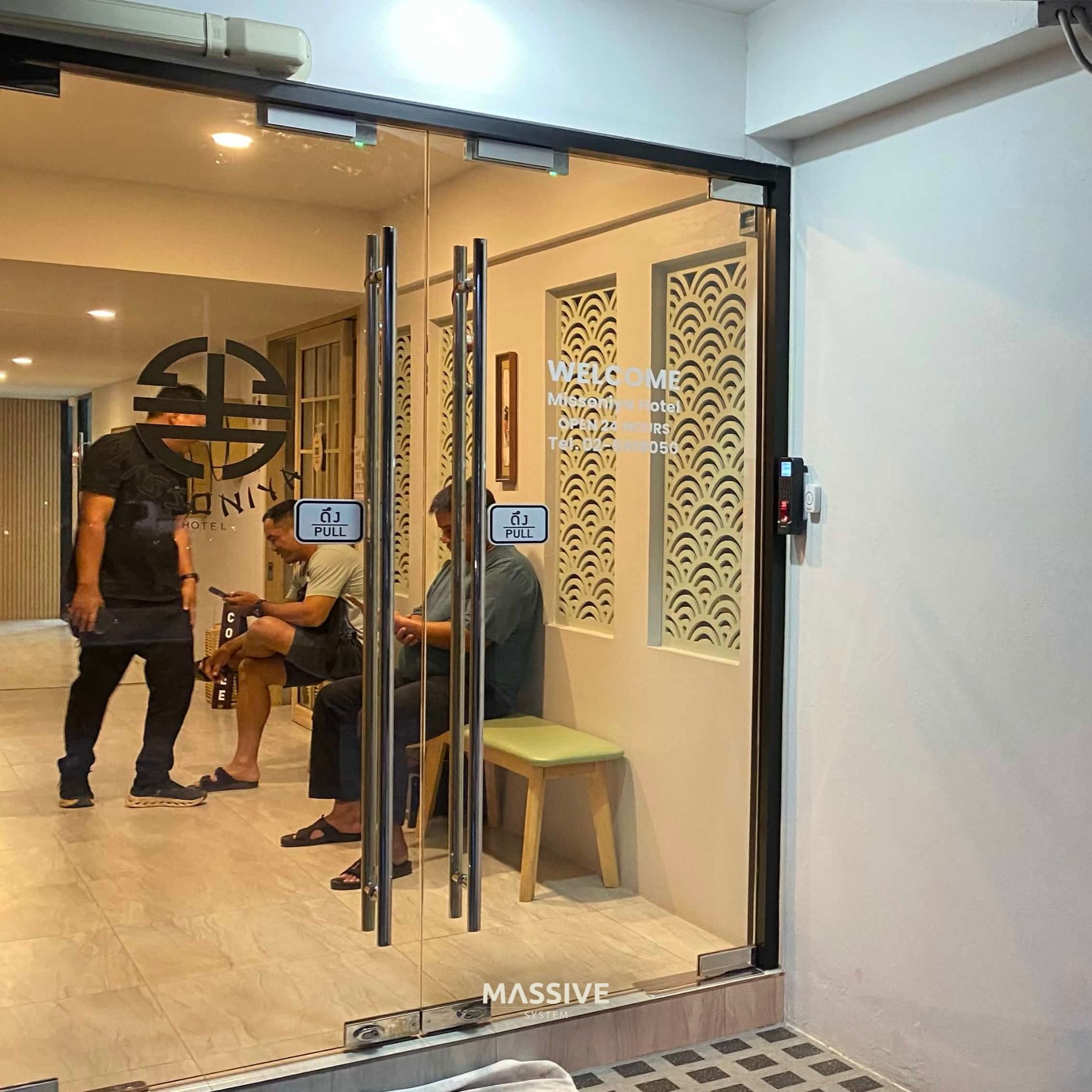
Within the same corporate building, deploying a Hybrid Architecture is frequently the smartest strategy:
- High-Traffic Building Ingress: Use Access Control
- Server Rooms & Mission-Critical IT: Use Access Control
- General Department Suites: Use Access Control
- Executive Suites: Use high-end Digital Door Locks
- Private Meeting Rooms: Use standalone Digital Door Locks
- Private Studios without central reporting needs: Use sleek Digital Door Locks
Excellence in security engineering isn't forcing one hammer on every nail; it is orchestrating the exact right technology for each specific architectural opening.
Executive Verdict: Digital Door Lock or Access Control?
If you ask where Digital Door Locks and Access Control truly diverge:
Historically, people summarized it as:
Digital Door Locks = Standalone hardware
Access Control = Centralized management
Today, that boundary is far more nuanced, as digital locks gain mobile apps, cloud portals, and user lists.
Here is the modern definition:
Digital Door Locks prioritize door-centric convenience for residences and boutique spaces.
Access Control prioritizes system-wide governance of identities, permissions, and operational data for enterprises.
And remember our core rule of thumb:
Never choose based solely on door count.
One single door serving 10 users versus one single door serving 1,000 users are entirely distinct engineering challenges.
If users are few, traffic is low, and downstream software integrations are unnecessary, a Digital Door Lock is often your best, cleanest investment.
However, when personnel scale grows, cycles become intense, permission hierarchies emerge, or entry telemetry must feed HR, Payroll, CCTV, or Visitor Management—
You are no longer just shopping for door locks.
You are architecting:
Who can enter, Where, When, How that event is recorded, and How your organization leverages that intelligence.
That is Access Control.
Whatever Your Requirement: Massive System Delivers
Ultimately, every architectural portal has distinct operational requirements.
A family home may seek a sleek, feature-rich Digital Door Lock that is effortless for all ages.
A creative studio may need 2–3 digital locks governed easily through a smartphone app.
A busy commercial facility may have a single entrance door with thousands of daily cycles that demands Access Control from day one.
While a corporate enterprise demands multi-zone Access Control integrated deeply into Time Attendance, HR Payroll, CCTV, and elevator banks.
Whether you seek a premier Digital Door Lock for your home or boutique office, or an industrial Access Control ecosystem for enterprise campuses, factories, and facilities—Massive System Co., Ltd. provides end-to-end design, hardware procurement, precision installation, and systems integration.
We never begin by asking "which lock model should we push?"
We begin with the consultative question:
"What specific ingress governance does your facility actually require?"
Then we engineer the exact right solution for your reality.
If you are evaluating between Digital Door Locks and Access Control, send your door specs, user numbers, traffic frequency, and project criteria to our engineering team for an initial evaluation.
Contact Massive System / Massive Lock:
- Website: massivelock.com
- LINE Official: @mssiv
From a single residential door to building-wide enterprise security infrastructure, our engineering team is here to guide you.
Point-by-Point Matrix
A technical summary evaluating architectural requirements, infrastructure, and deployment fit.
| Evaluation Criteria | Digital Door Lock | Access Control System |
|---|---|---|
| Design Philosophy | Focused on an individual door or compact area (Door-Centric) | Governs 'Who Enters Where and When' across the entire facility (System-Centric) |
| Hardware Infrastructure | Self-contained unit, battery operated, no central controller or server | Readers, Central Controllers, Maglocks, REX buttons, Sensors, Server & Software |
| Personnel & Traffic Scale | Best for 4–20 users with dozens of unlocks per day | Built for hundreds to thousands of users, high-frequency continuous duty cycles |
| Permission Governance | Managed per device via app or keypad, ideal for straightforward permissions | Enroll once centrally; instantly revoke departing staff credentials from all 50 doors |
| Data Depth & Audit Logs | Basic history of who opened the door and when for casual app inspection | Full telemetry: timestamp, credentials, pass/deny reasons, door ajar, forced entry alarms |
| System Integration | Confined to manufacturer proprietary app ecosystem | Direct API integration into HR Time Attendance, Payroll, CCTV, Turnstiles & Elevators |
| Ideal Deployment | Homes, condos, executive offices, private meeting rooms, small offices (1–2 doors) | Commercial campuses, multi-tenant offices, factories, high-traffic main entrances |
Need Architectural Consultation?
Our security engineers provide complimentary site visits, door structural surveys, and system sizing.